

How Memes Ruined Everything
(My bad)
Hi, welcome back to CONTENT. A lot has happened this quarter: I had a daughter, CONTENT evolved into a creative studio called CONTENT WORLD (for inquiries visit content.world), and the state of geopolitics has unravelled to the point that WW3 Outfits is trending on TikTok. I promise to never leave you hanging this long again.
We have a paid-only dispatch of the Attention Economics series coming next week — a deep dive on my iPhone Wabi-Sabi theory — but this one is free because I need to atone for my own personal contributions to the apocalypse. No, I don’t secretly make content for Palantir. But I did help engender a wave of marketing that uses memes to sell fashion. And it’s time to put that proverbial genie back in its proverbial bottle.
It seemed like a good idea at the time — many of the worst things do — but there are four main reasons why memes make sense as a brand marketing tool:
They’re digitally native — Memes are the dominant language of online culture, so it would therefore make sense for brands to want to speak this language as a way of building closeness with their audience and meeting the audience “where they are.”
They’re incredibly engaging — A hyper-retouched glossy image registers in the back of your brain as “ad” when you scroll past it. Whereas memes suck you in…What’s the joke? Why is it funny?
They’re cheap to make — At most all you need is someone funny with an iPhone and/or Adobe to make professional-grade memes. If you compare this to what brands normally spend to make fashion images — millions upon millions per year — memes are basically free.
They’re a growth hack — If you want to get a lot of people to see a picture of your purse with a SHOP NOW button on Instagram, you’re going to have to shell out serious ad spend. If you make the right meme, you can get hundreds of thousands of dollars worth of views organically without paying anything.
When I joined SSENSE as Head of Creative and Content in 2022, I didn’t think consciously about any of the above. It was the first time I had ever held a job that didn’t have the word “Editor” in it, and I hadn’t yet learned to think on those terms. Instead, my truffle pig’s instinct for telling stories and growing audiences sort of just took us there.
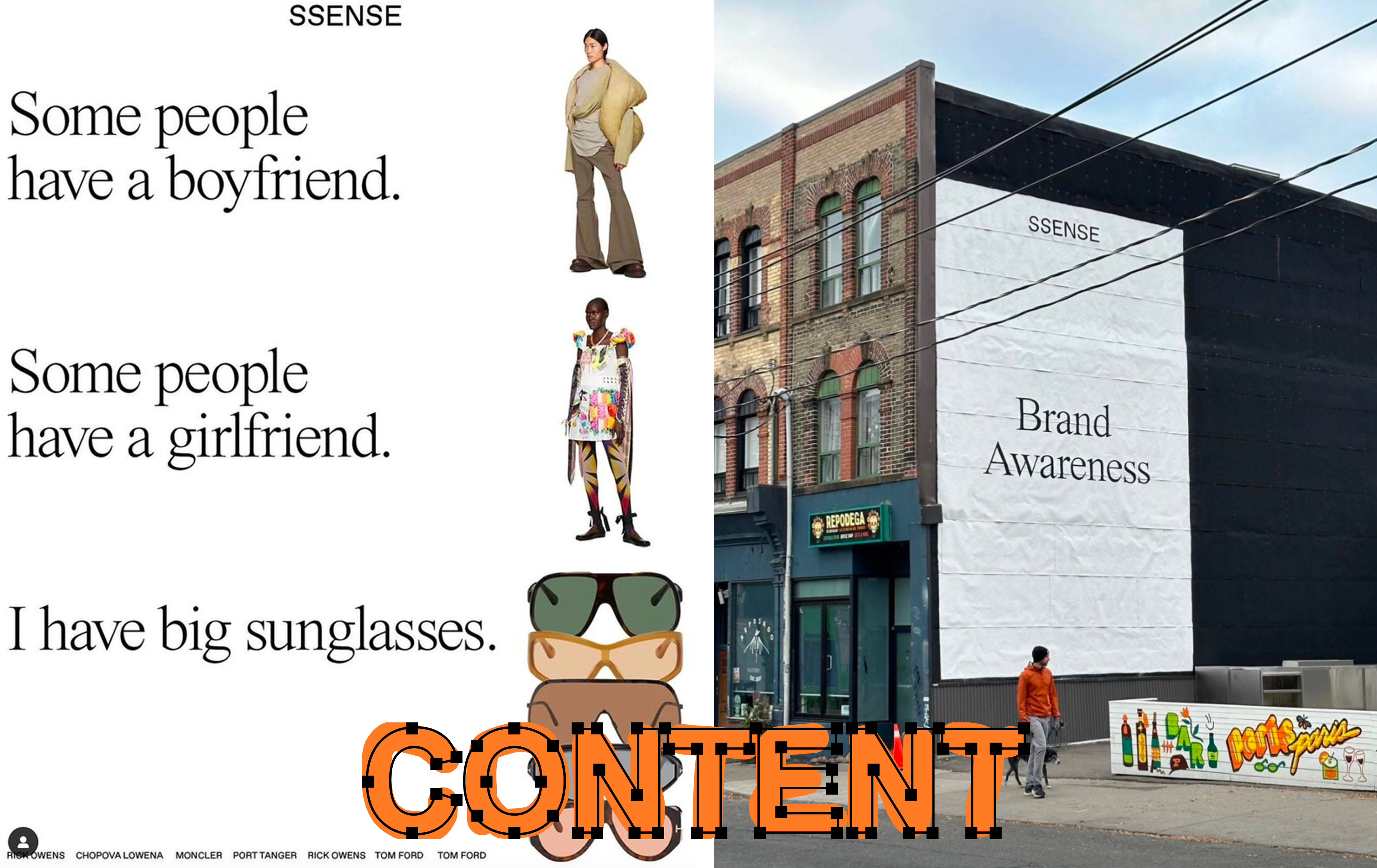
But what was crystal clear from the outset was that memes made sense for SSENSE because SSENSE was already a meme. The clone-like ecomm models, the novel selection of products, the feeding frenzy created by its biannual sales — these things were memes long before we ever set foot in the building. It’s a lot easier to stir a pot that’s already boiling than to heat up your own.
(And that brings me to rule number one of contemporary branding: Culture is made by people. Brands can only serve to shepherd culture, ruin it, or gracefully ignore it. Whether it’s showering in Arc’teryx, building tridents with White Monster Energy cans, or finding a Loewe Tomato, people are the ones who can successfully turn brands into memes. Brands can only ride the wave, or wipe out.)
The two years that followed at SSENSE were an engagement (and aura) harvest for the ages. Our views quadrupled year over year. Our engagement rate on Instagram was 10x that of our closest competitor. Trade publications couldn’t stop writing articles about us. We got short-listed for Cannes Lions and other awards whose names I can’t remember. But most joyously of all, our #Social-Only Slack had turned into an always-on writers room overflowing with ideas so based, the vast majority of them never saw the light of day. (We came this close to making a billboard that said WHOSE THERESA? in reference to our competitor MyTheresa.)
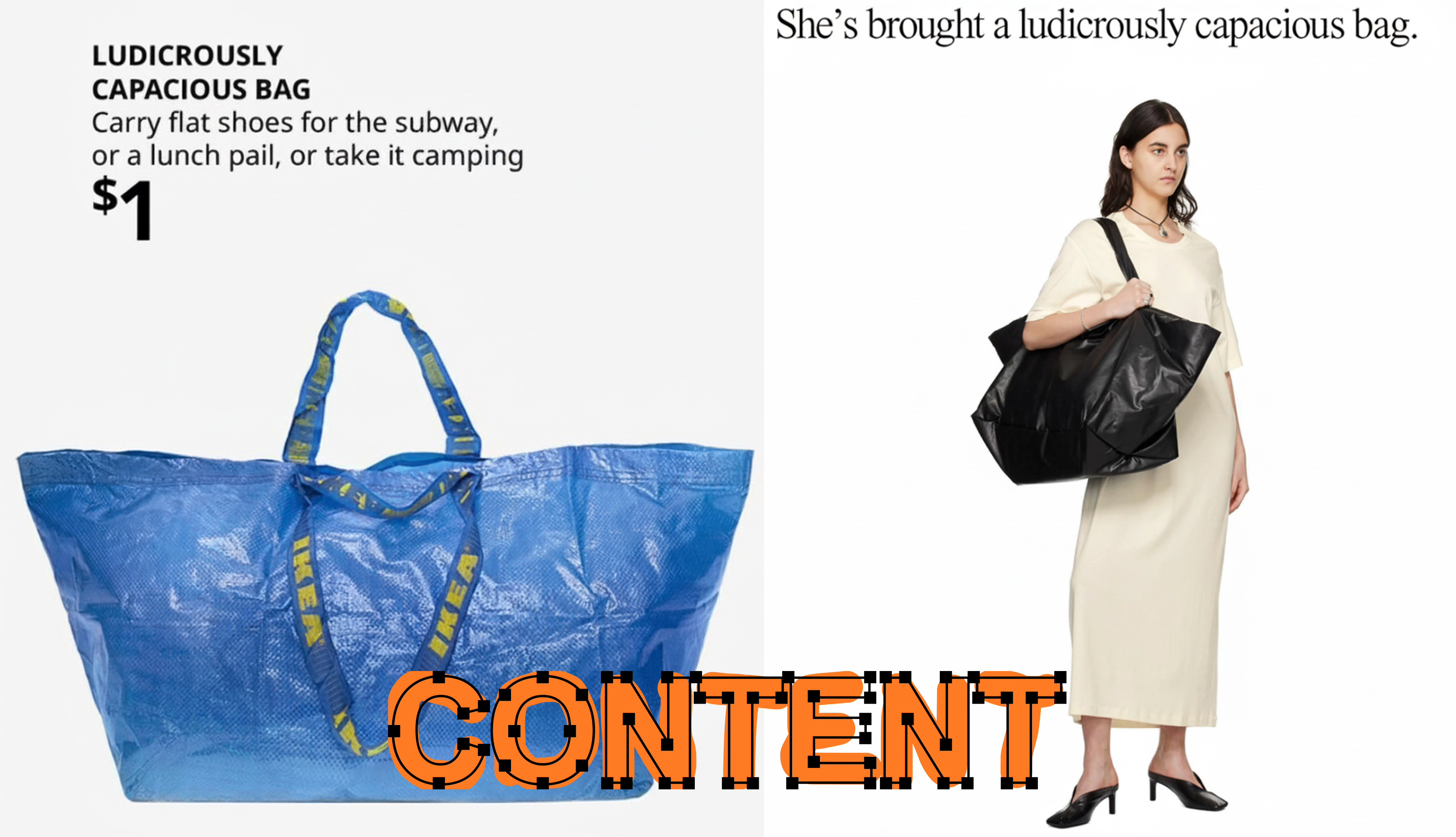
But by 2024 the whole thing began to feel a little boring. Countless brands were now doing the same exact thing we were doing. But, more importantly, the entire exercise began to feel less relevant. Got it, brands can be as funny as real people online. Now what? We embarked on a process of completely rebooting our content strategy, but I left the company before we finished (and SSENSE ran into bigger problems than being sick of memes).
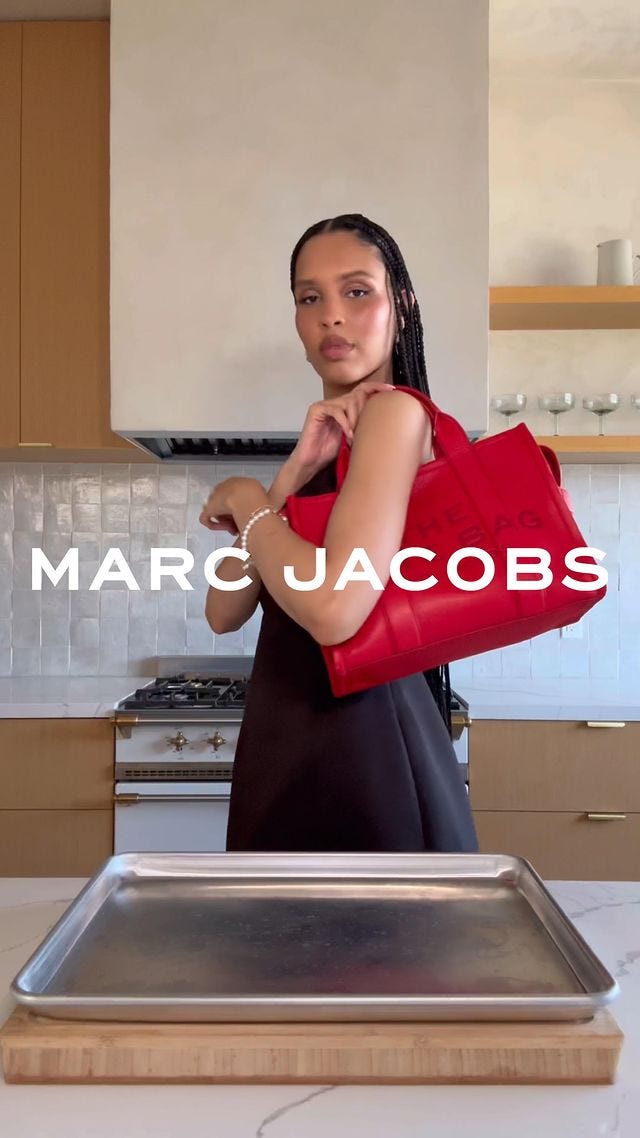
It’s important to note here that we were by no means operating in a vacuum at SSENSE. A lot of our ideas owed a debt to Demna’s peak at Balenciaga, or to the OG proto-memes of Oliviero Toscani, or to the deeply funny fashion meme accounts that paved the way (our head of instagram at SSENSE was also the admin of @throwingfits), or to contemporaries like Ava Nirui who was absolutely cooking at Marc Jacobs during our time at SSENSE. But like anything good online, what we were all up to was on the verge of being cooked.
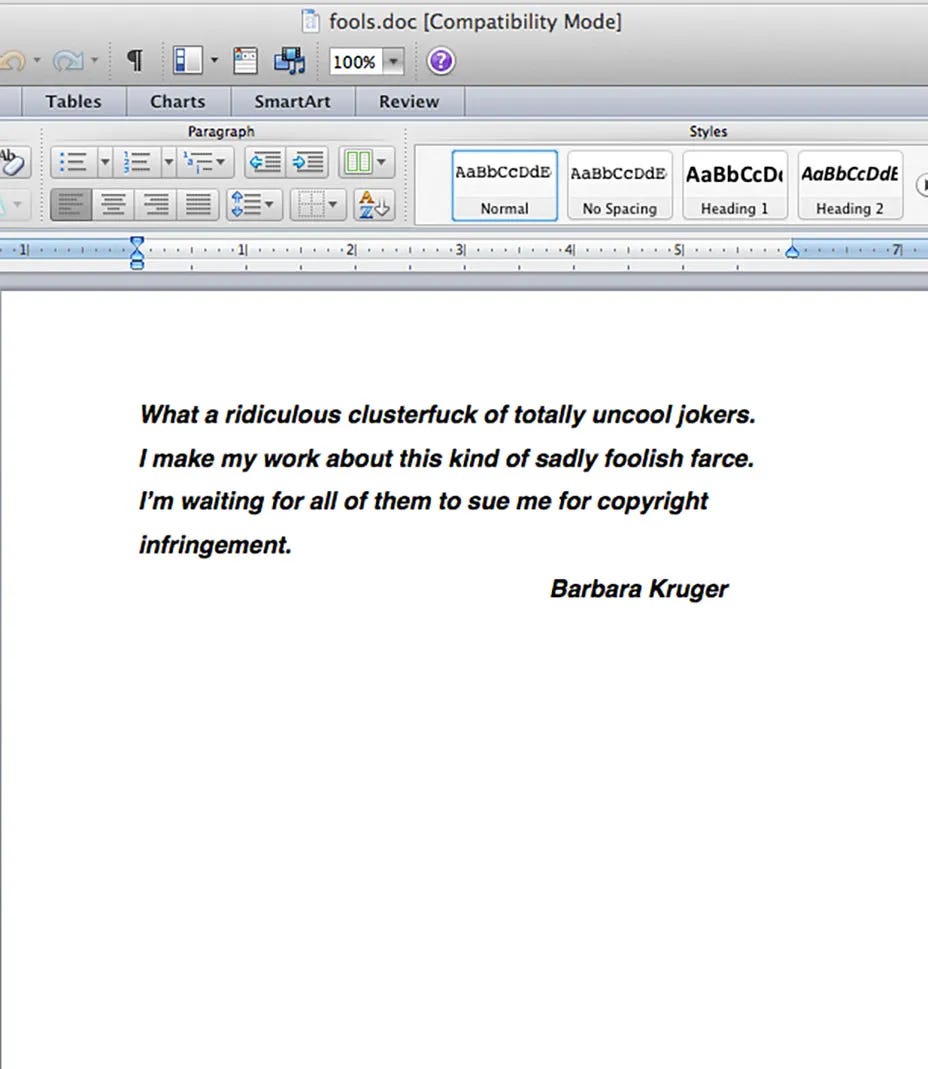
To quote Barbara Kruger’s infamous letter to Supreme: sometimes the work you make becomes the “sadly foolish farce” you sought to describe in the first place. Making memes for a fashion brand was fun at first because it felt like “anti-marketing” — something that resisted and undermined the polished (and elitist) forms of traditional fashion image-making. But when that strategy returns to the mothership of capitalism it feels doubly insidious, like a brand has sent cultural spies to come speak your language and sell you stuff. The creative agency meme account @silencebrands is spot on at capturing this tension: between zillennial creative workers and the brands that use them tap into the cultural bloodstream.
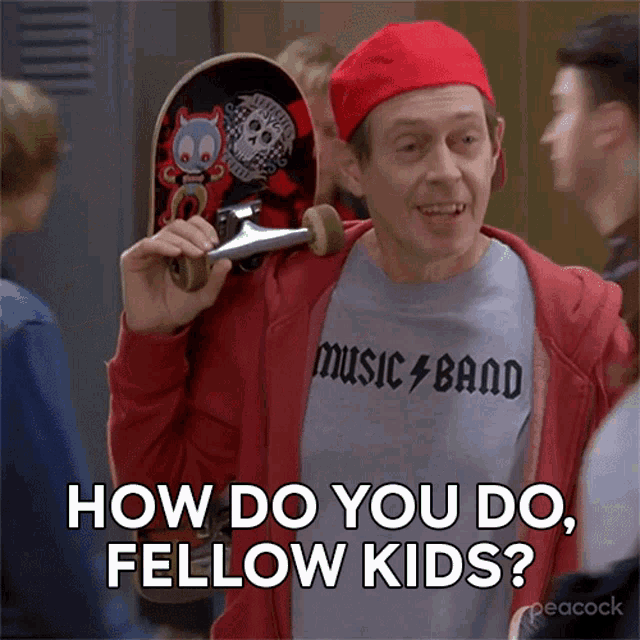
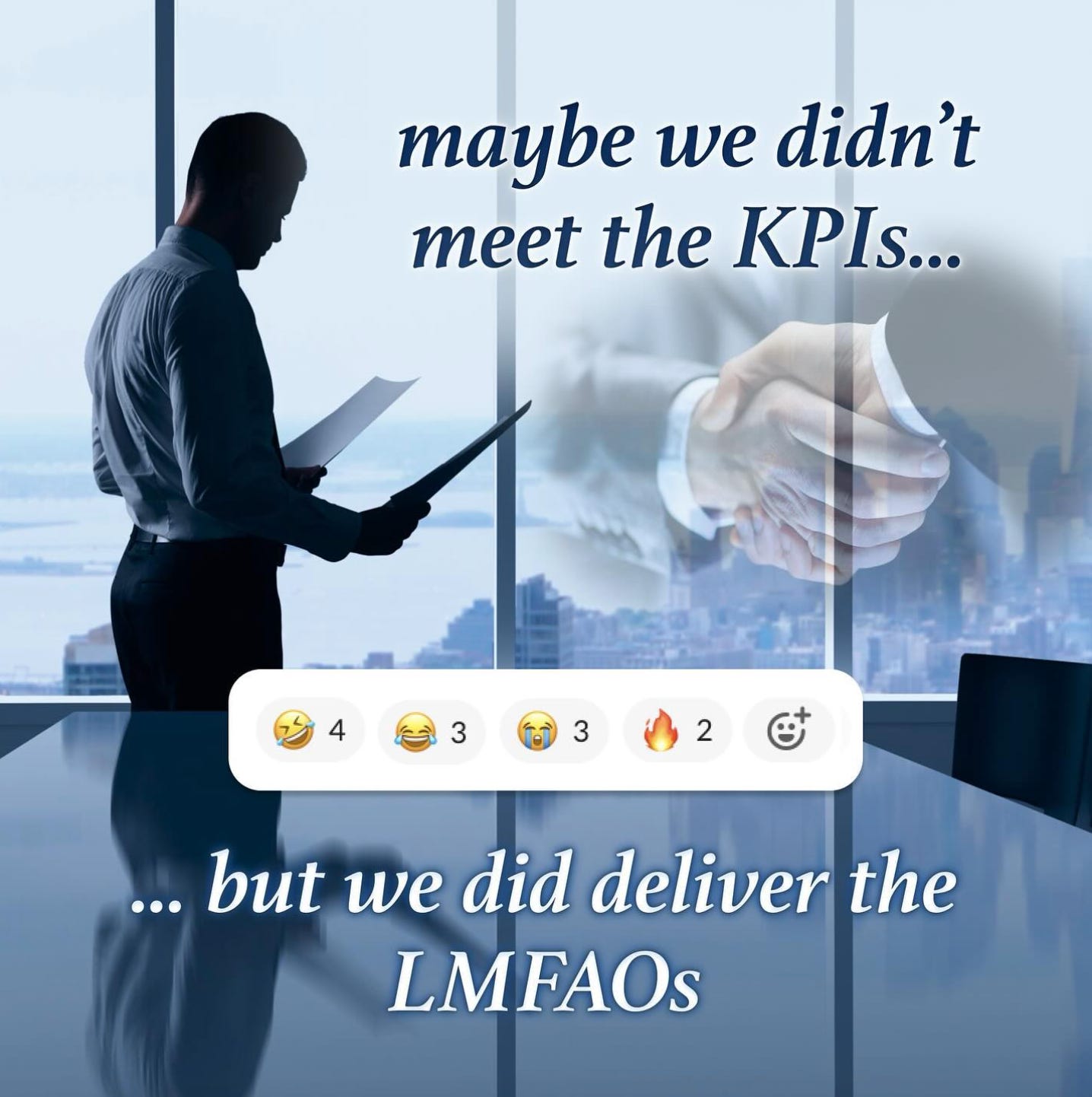
Whether it’s getting the elderly museum director to rattle off zoomer speak, or the ongoing burger clapbacks between Burger King and McDonald’s, or Zalando making SSENSE memes for LTNs, or Yahoo’s cheugy new social media strategy, or the horror show taking place on the PopTarts Instagram, or whatever the fuck happened to Leonardo DiCaprio at the Oscars, today’s brand memes flop because you can viscerally feel how hard they are trying to be clever and “highly relatable.”
This pandering is what puts meme-marketing so deep into the cringe cycle. And it begs the question: Should marketing try to be digitally native? Should it even care about being relatable?
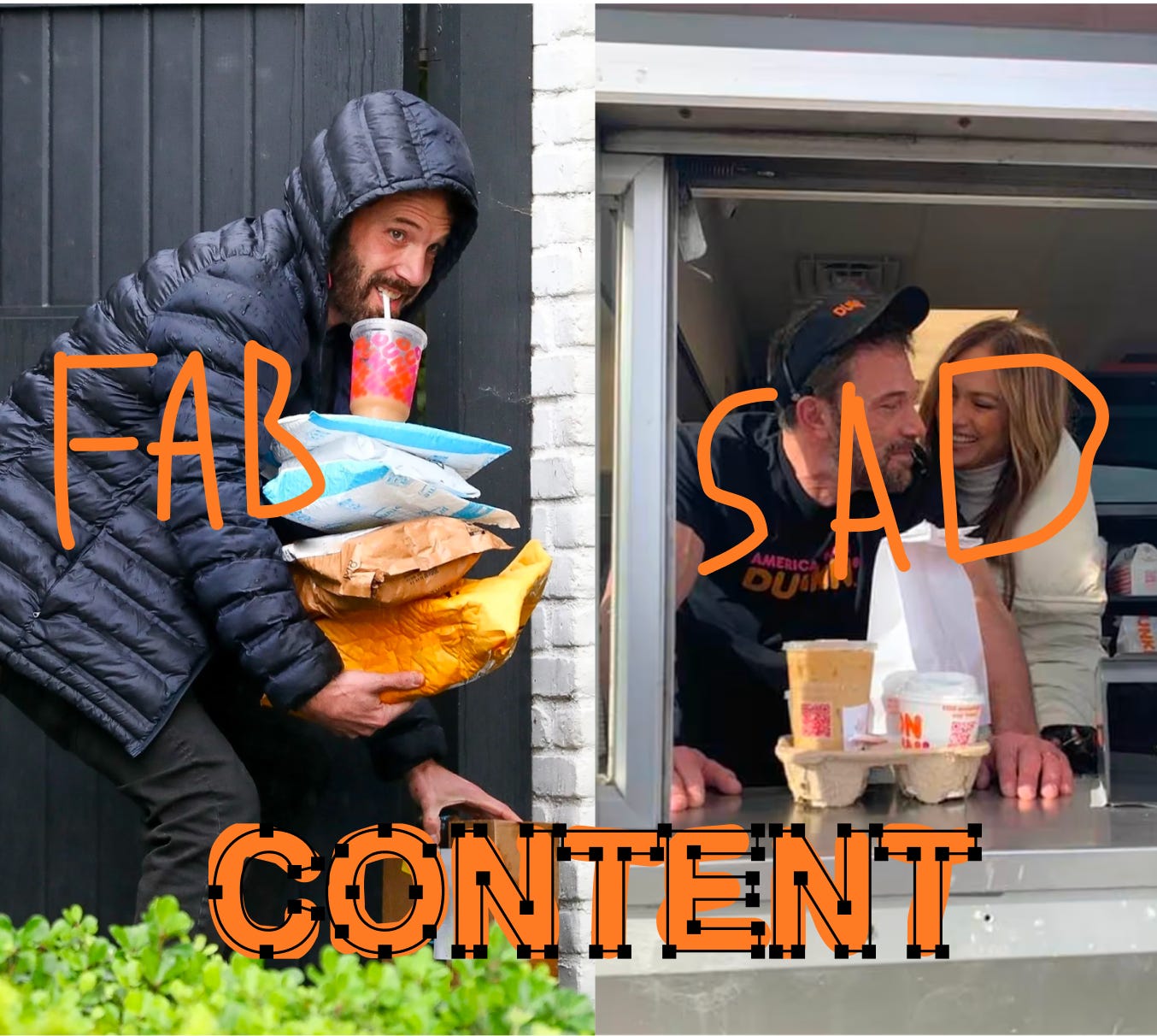
One must wonder if brands are even getting what they need from these memes, especially as the stunts become higher and higher budget (a la Ben Affleck’s ongoing Dunkin’ Donuts Gesamtkunstwerk). Are memes generating loyalty? Probably not. Are they selling stuff? Maybe… sometimes. Are they building cultural relevance? Yes and no. As my esteemed comrade Ana Andjelic who does The Sociology of Business recently wrote in her scathing report on the death of viral marketing: “Anything that doesn’t drive long-term value is just expensive distraction.”
The patron saint of Gen X fashion designers, Raf Simons, recently made waves online for saying “maybe [fashion] was nicer when it was more elitist.” And while I don’t hold the same sentiment, I understand why it is so sticky. At a time when brands are bending over backwards to get on our level and speak our language, what we really crave now is ambition: whether that takes the form of Pre-Zara John Galliano, Hype Williams’s multi-gagillion dollar music videos, Chris Cunningham’s ads for Playstation, or Spike Lee’s ads for Nike. Ambition doesn’t necessarily mean something high budget or something created by someone famous. It just needs to exist on a level of ideas and execution beyond what the edgelords at home can make. The rest is just slop.
Now, excuse me while I light this Parliament cigarette and drive off into the night.
This post was researched in partnership with Viktor Wendt. Check out his substack Substanz.
Who IS Theresa tho?
Nice @Viktor Wendt 💞